

Neutering spaying for females, castration for males is a routine surgical procedure that prevents unwanted pregnancy and reduces or eliminates the risk of several serious diseases, with the right timing depending on your pet’s species, breed and size.Working Out If And When To Neuter Your Pet

Neutering is one of those decisions that comes with a lot of conflicting opinions attached well-meaning advice from other owners, things you’ve read online, what your breeder said. It’s worth knowing there’s a genuinely well-established, sensible case for it, and that timing matters more than people often realise.
This is a routine procedure one of the most commonly performed in veterinary medicine but routine doesn’t mean it deserves any less care or explanation. You’re making a decision about your pet’s body and their future health, and it’s reasonable to want to understand exactly why before you commit to it.
We’ll talk you through the real benefits, the genuine considerations, and the right timing for your specific pet not a generic answer that applies to every animal that comes through the door.
For females, spaying removes the risk of pyometra entirely a uterine infection that can become life-threatening and significantly cuts the risk of mammary tumours, especially when done before the first season. It also rules out ovarian and uterine cancers and unwanted pregnancies altogether.
For males, castration removes the risk of testicular cancer completely and can lower the chances of certain prostate problems later on. It may also ease some hormone-driven behaviours marking, roaming, mounting, some forms of aggression between males though how much varies from animal to animal, and it’s not a substitute for proper training.
None of this is about treating your pet as somehow less themselves afterwards. It’s about avoiding diseases that are entirely preventable and giving them a more comfortable, settled life.
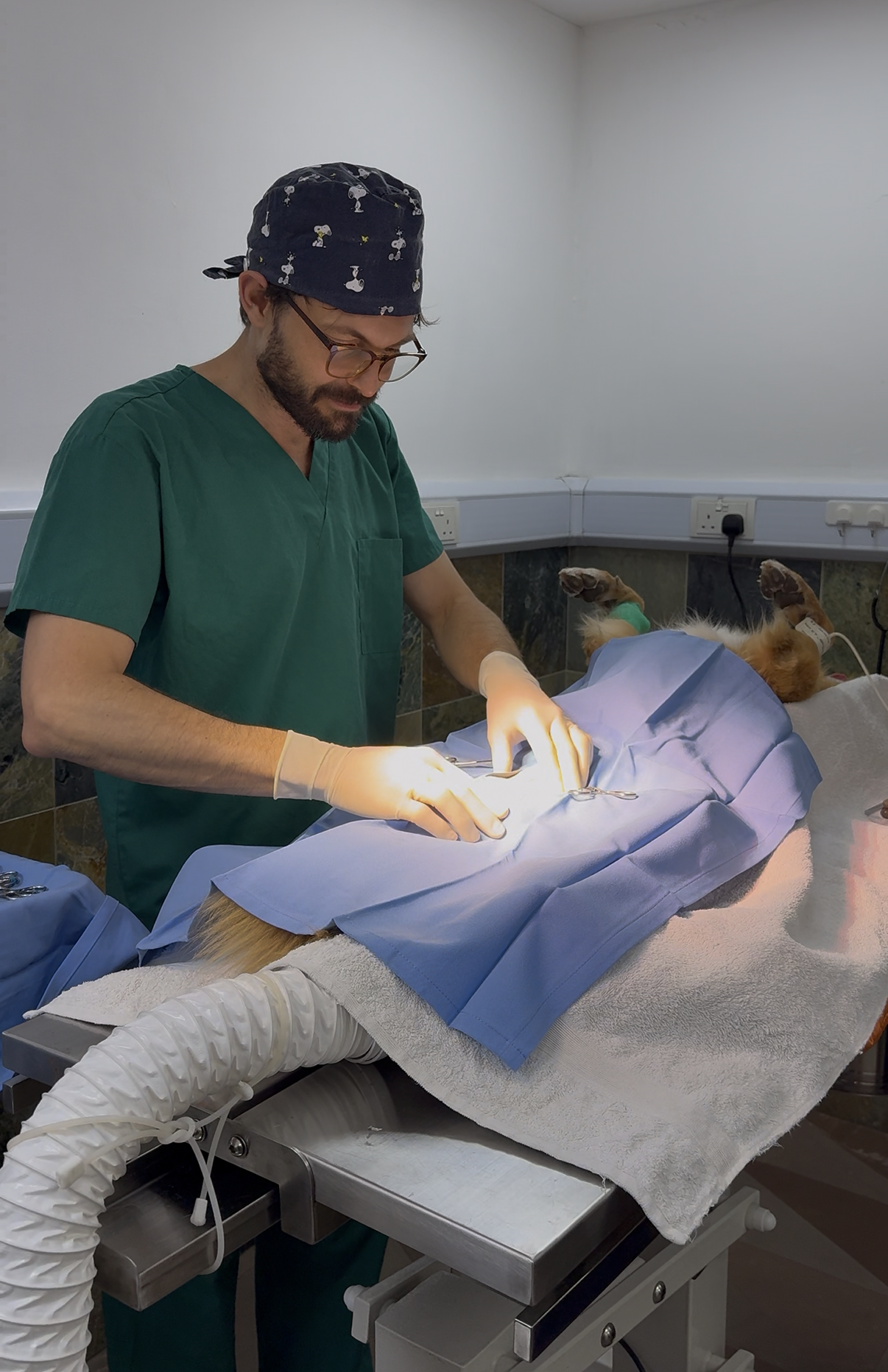
We don’t treat this as a tick-box procedure. Your pet’s age, breed, health, sex and individual circumstances all factor into what we’d actually recommend and when the right timing for a small breed cat is genuinely different from the right timing for a large breed dog.
Removing the ovaries and uterus under general anaesthesia, through a small abdominal incision. Once done, your pet can no longer come into season or become pregnant.
Removing both testicles under general anaesthesia. Generally less invasive than spaying, and most male pets bounce back quickly, though they'll still need a short period of rest.
For cats, we typically recommend neutering from around five months. For dogs, it varies more larger breeds often do better waiting until they're closer to full skeletal growth, while smaller breeds can usually go earlier. We'll work out what's right for your specific pet rather than applying one rule to everyone.
Your vet checks your pet over and talks you through the procedure properly the benefits, the risks, what recovery actually looks like, and anything you need to do beforehand, including fasting. For some pets, we’ll suggest blood testing first to check everything’s in good shape before anaesthesia.
Your pet is admitted and given a final check before going under. Throughout, we continuously monitor heart rate, oxygen levels, blood pressure and temperature, and pain relief is given before, during and after not just as an afterthought.
Most pets go home the same day. You’ll get clear instructions covering:
Medication
Feeding
Exercise restrictions
Wound care
A follow-up appointment
Expect your pet to be a bit quiet for the first day or so as the anaesthetic clears, and activity generally needs to stay restricted for around 10 to 14 days while they heal properly. If anything worries you during recovery, call us we’re here for exactly that.
Choosing where your pet has any surgery, including this one, matters, even when the procedure itself is routine.
You’ll find experienced surgeons, skilled nursing support and proper anaesthetic monitoring here, with diagnostics, lab testing and hospitalisation all available on site if anything needs following up. Mostly, though, you’re choosing a team who treats every animal that comes through the door as if it were their own.
Cats are typically neutered from around five months. For dogs, timing varies by breed size larger breeds often do better waiting until closer to full skeletal growth, while smaller breeds can usually be neutered earlier.
Castration removes the risk of testicular cancer entirely, can lower the chances of certain prostate problems, and may ease some hormone-driven behaviours such as marking, roaming and mounting though it’s not a substitute for training.
It might soften some hormone driven behaviours, but it won’t change who your pet fundamentally is. They’ll still be the same companion you know, just without certain instincts driving them.
It’s possible, neutering can slightly slow metabolism, so if feeding and exercise stay exactly the same, some pets gain weight more easily. It’s manageable with the right diet and activity, and we can help you adjust as needed.